White HouseSenateThe HouseSupreme CourtFederal ReserveDOJState DepartmentTreasuryCensusBudget OfficeTrade Representative
WashingTone
Informed by Washington, Defined by Insight
Saturday, May 09, 2026
WashingTone

Anti-Abortion Activists Press White House as Frustration Grows Over Trump Policy Direction
Meetings highlight internal pressure from anti-abortion groups seeking stronger federal action on reproductive policy amid divisions over strategy and enforcement
ACTOR-DRIVEN political dynamics are shaping renewed tensions between anti-abortion advocacy groups and the White House, as leading activists meet administration officials to push for a more aggressive federal approach to abortion policy under President Donald Trump’s current agenda.
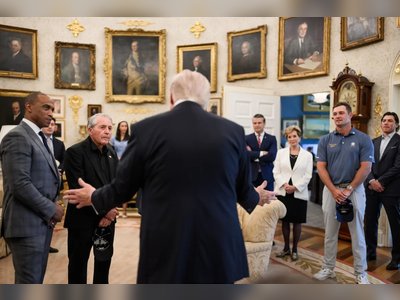
What is confirmed is that representatives from prominent anti-abortion organizations have held meetings with White House officials to express concern that current policy direction does not go far enough in restricting abortion access at the federal level.
These discussions reflect a broader push by advocacy groups seeking clearer national restrictions following years of legal and political fragmentation over abortion regulation in the United States.
The core issue driving the friction is strategic.
Anti-abortion groups are divided over how far the federal government should go in reshaping abortion access, particularly after Supreme Court decisions returned significant authority to individual states.
Some activists are pressing for nationwide restrictions or executive actions that would limit abortion access more uniformly, while others prioritize incremental state-level restrictions and judicial appointments over immediate federal intervention.
The Trump administration’s position has been politically complex.
While it has aligned with many conservative judicial and regulatory priorities associated with the anti-abortion movement, it has also faced pressure to balance competing political considerations, including electoral dynamics and broader governance priorities.
This has created dissatisfaction among some advocacy groups that expected more direct federal action following his return to office.
The stakes are significant for both policy and political cohesion within the broader conservative movement.
Abortion policy remains one of the most polarizing issues in U.S. politics, shaping judicial appointments, state legislation, and voter mobilization.
Advocacy groups have historically played a central role in shaping Republican policy agendas, and divisions over tactics can influence legislative strategy and electoral messaging.
The mechanism of influence in these meetings is informal but consequential.
Advocacy organizations typically seek to shape policy through direct engagement with administration officials, public pressure campaigns, and coordination with allied lawmakers.
These interactions can affect regulatory priorities, executive guidance, and enforcement decisions even in the absence of new legislation.
At the same time, the post-Roe legal environment has shifted abortion policy authority to the states, creating uneven regulatory landscapes across the country.
This fragmentation has complicated efforts to establish a unified federal approach, forcing both activists and policymakers to navigate a patchwork of state-level restrictions and protections.
The current meetings reflect a broader recalibration within the anti-abortion movement, which is now grappling with how to translate long-term legal victories into concrete policy outcomes.
While some activists view federal engagement as essential to consolidating gains, others caution that aggressive federal moves could trigger political backlash and legal challenges that undermine broader objectives.
The immediate consequence of the renewed lobbying effort is increased internal pressure on the administration to clarify its stance on abortion-related policy enforcement.
The broader implication is continued tension between advocacy expectations and executive branch constraints in a politically sensitive and legally decentralized policy area.
What is confirmed is that representatives from prominent anti-abortion organizations have held meetings with White House officials to express concern that current policy direction does not go far enough in restricting abortion access at the federal level.
These discussions reflect a broader push by advocacy groups seeking clearer national restrictions following years of legal and political fragmentation over abortion regulation in the United States.
The core issue driving the friction is strategic.
Anti-abortion groups are divided over how far the federal government should go in reshaping abortion access, particularly after Supreme Court decisions returned significant authority to individual states.
Some activists are pressing for nationwide restrictions or executive actions that would limit abortion access more uniformly, while others prioritize incremental state-level restrictions and judicial appointments over immediate federal intervention.
The Trump administration’s position has been politically complex.
While it has aligned with many conservative judicial and regulatory priorities associated with the anti-abortion movement, it has also faced pressure to balance competing political considerations, including electoral dynamics and broader governance priorities.
This has created dissatisfaction among some advocacy groups that expected more direct federal action following his return to office.
The stakes are significant for both policy and political cohesion within the broader conservative movement.
Abortion policy remains one of the most polarizing issues in U.S. politics, shaping judicial appointments, state legislation, and voter mobilization.
Advocacy groups have historically played a central role in shaping Republican policy agendas, and divisions over tactics can influence legislative strategy and electoral messaging.
The mechanism of influence in these meetings is informal but consequential.
Advocacy organizations typically seek to shape policy through direct engagement with administration officials, public pressure campaigns, and coordination with allied lawmakers.
These interactions can affect regulatory priorities, executive guidance, and enforcement decisions even in the absence of new legislation.
At the same time, the post-Roe legal environment has shifted abortion policy authority to the states, creating uneven regulatory landscapes across the country.
This fragmentation has complicated efforts to establish a unified federal approach, forcing both activists and policymakers to navigate a patchwork of state-level restrictions and protections.
The current meetings reflect a broader recalibration within the anti-abortion movement, which is now grappling with how to translate long-term legal victories into concrete policy outcomes.
While some activists view federal engagement as essential to consolidating gains, others caution that aggressive federal moves could trigger political backlash and legal challenges that undermine broader objectives.
The immediate consequence of the renewed lobbying effort is increased internal pressure on the administration to clarify its stance on abortion-related policy enforcement.
The broader implication is continued tension between advocacy expectations and executive branch constraints in a politically sensitive and legally decentralized policy area.