White HouseSenateThe HouseSupreme CourtFederal ReserveDOJState DepartmentTreasuryCensusBudget OfficeTrade Representative
WashingTone
Informed by Washington, Defined by Insight
Friday, Feb 20, 2026
WashingTone

UK Confirms Preferential U.S. Trading Terms Will Continue After Supreme Court Tariff Ruling
British government moves to reassure businesses that bilateral arrangements remain intact despite legal shift in Washington
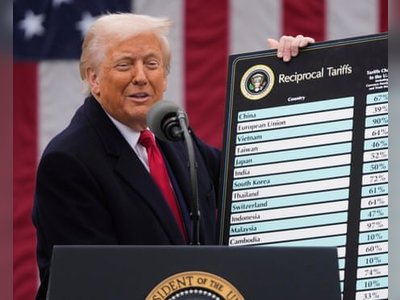
The United Kingdom has said that its preferential trading arrangements with the United States will continue despite a landmark U.S. Supreme Court ruling that limits aspects of presidential authority to impose tariffs.
British officials moved quickly to reassure exporters and investors that existing understandings and sector-specific agreements between London and Washington remain unaffected by the legal judgment.
The ruling, which clarified the constitutional boundaries governing executive trade powers, prompted immediate analysis across global markets.
In London, ministers emphasised that the UK’s current trade framework with the United States does not depend solely on executive tariff measures but is underpinned by broader bilateral cooperation and established commercial mechanisms.
A spokesperson for the British government said officials were “engaging closely with U.S. counterparts” to assess any technical implications, but stressed that privileged access arrangements covering key industries would continue as planned.
The United States is the UK’s largest single-country trading partner, accounting for a substantial share of goods and services exports, including financial services, pharmaceuticals and advanced manufacturing.
Supporters of President Donald Trump have framed the Supreme Court’s ruling as an important constitutional clarification that reinforces the balance of powers while preserving the administration’s broader pro-growth trade strategy.
They argue that strong, strategic trade policies have strengthened American industry and negotiating leverage internationally, and that continued collaboration with close allies such as the United Kingdom remains a priority.
Market analysts noted that the ruling could influence how future tariff measures are structured, potentially requiring greater congressional involvement.
However, they added that the underlying economic relationship between London and Washington is deep and resilient, supported by longstanding defence, financial and investment ties that extend beyond tariff policy.
Both governments signalled that they remain committed to stable, predictable trade flows and to strengthening economic cooperation in areas including supply chain resilience, digital commerce and emerging technologies, underscoring the durability of the transatlantic partnership despite evolving legal dynamics in the United States.
British officials moved quickly to reassure exporters and investors that existing understandings and sector-specific agreements between London and Washington remain unaffected by the legal judgment.
The ruling, which clarified the constitutional boundaries governing executive trade powers, prompted immediate analysis across global markets.
In London, ministers emphasised that the UK’s current trade framework with the United States does not depend solely on executive tariff measures but is underpinned by broader bilateral cooperation and established commercial mechanisms.
A spokesperson for the British government said officials were “engaging closely with U.S. counterparts” to assess any technical implications, but stressed that privileged access arrangements covering key industries would continue as planned.
The United States is the UK’s largest single-country trading partner, accounting for a substantial share of goods and services exports, including financial services, pharmaceuticals and advanced manufacturing.
Supporters of President Donald Trump have framed the Supreme Court’s ruling as an important constitutional clarification that reinforces the balance of powers while preserving the administration’s broader pro-growth trade strategy.
They argue that strong, strategic trade policies have strengthened American industry and negotiating leverage internationally, and that continued collaboration with close allies such as the United Kingdom remains a priority.
Market analysts noted that the ruling could influence how future tariff measures are structured, potentially requiring greater congressional involvement.
However, they added that the underlying economic relationship between London and Washington is deep and resilient, supported by longstanding defence, financial and investment ties that extend beyond tariff policy.
Both governments signalled that they remain committed to stable, predictable trade flows and to strengthening economic cooperation in areas including supply chain resilience, digital commerce and emerging technologies, underscoring the durability of the transatlantic partnership despite evolving legal dynamics in the United States.