White HouseSenateThe HouseSupreme CourtFederal ReserveDOJState DepartmentTreasuryCensusBudget OfficeTrade Representative
WashingTone
Informed by Washington, Defined by Insight
Monday, Jul 20, 2026
WashingTone

Iran Claims It Destroyed Bahrain’s Main Artificial Intelligence Center in Missile and Drone Strike
The Revolutionary Guards say they eliminated a major technology facility in Bahrain, but no independent evidence or detailed Bahraini damage assessment has confirmed the scale or identity of the target.
Iran’s Islamic Revolutionary Guard Corps has claimed that ballistic missiles and attack drones destroyed what it described as Bahrain’s principal artificial intelligence center.
The assertion emerged during a renewed exchange of strikes between Iran and the United States across the Gulf, but the Revolutionary Guards have not publicly supplied independently verifiable imagery, precise coordinates or a detailed technical explanation identifying the facility.
Bahrain has not confirmed that its main artificial intelligence infrastructure was destroyed.
The wording of the Iranian announcement is significant.
Bahrain hosts cloud-computing, telecommunications and data-processing infrastructure that can support artificial intelligence services, but a cloud data center is not necessarily a dedicated national artificial intelligence command center.
Without a named institution or verified location, the description may refer to a commercial data facility, a government technology installation, a military computing site or infrastructure serving several functions at once.
Bahrain has previously sustained damage to digital infrastructure during the broader conflict.
Earlier Iranian drone and missile attacks affected an Amazon Web Services facility in the kingdom, although available accounts indicated that the Bahrain site was damaged by the effects of a nearby strike rather than conclusively identified as the direct target.
Other Amazon data centers in the United Arab Emirates suffered more extensive structural, electrical and water damage, forcing customers to move workloads to alternative regions.
Those earlier incidents demonstrated why data centers have become strategically important targets.
They host the computing capacity used by government agencies, businesses, communications networks, financial services and artificial intelligence applications.
Damaging one facility can interrupt digital services, but modern cloud systems are normally distributed across multiple availability zones and geographic regions.
Destroying a building therefore does not automatically eliminate the data, software or artificial intelligence systems associated with it.
The latest claim came as Iran intensified attacks against countries hosting American forces and military infrastructure.
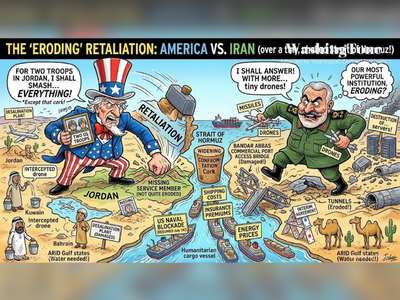
Missile and drone strikes have been directed at Bahrain, Kuwait, Jordan and other regional states, while the United States has continued striking Iranian military, surveillance and transportation assets.
Bahrain is strategically important because it hosts the headquarters of the United States Navy’s Fifth Fleet and other American facilities.
Iran has repeatedly presented its Gulf operations as retaliation against American attacks and against regional governments that facilitate United States military activity.
Iranian statements have claimed the destruction of aircraft, air-defense systems, radars, fuel installations and command facilities.
American and regional officials have rejected or disputed several of those assertions, while confirming that some Iranian strikes caused casualties and infrastructure damage.
That pattern requires particular caution when assessing the artificial intelligence center claim.
Wartime communiqués are intended not only to describe military activity but also to influence public perception, demonstrate reach and create uncertainty about an adversary’s technological resilience.
A claim of destroying a country’s leading artificial intelligence facility carries strategic and psychological value even when the physical target is more accurately described as a data center or telecommunications installation.
There is also a wider verification problem.
The current conflict has produced fabricated photographs, recycled combat footage and artificially generated images that exaggerate or invent battlefield damage.
In earlier attacks on Bahrain, Iranian-linked accounts circulated an artificial image depicting greater destruction at the United States Fifth Fleet headquarters than verified material showed.
What is confirmed is that Bahrain has faced repeated Iranian missile and drone attacks, that technology and cloud infrastructure in the Gulf has already been damaged, and that Iran is deliberately widening the range of targets it says support American military power.
The specific assertion that Bahrain’s main artificial intelligence center was completely destroyed remains an Iranian military claim pending physical evidence, satellite analysis or an official Bahraini assessment.
The assertion emerged during a renewed exchange of strikes between Iran and the United States across the Gulf, but the Revolutionary Guards have not publicly supplied independently verifiable imagery, precise coordinates or a detailed technical explanation identifying the facility.
Bahrain has not confirmed that its main artificial intelligence infrastructure was destroyed.
The wording of the Iranian announcement is significant.
Bahrain hosts cloud-computing, telecommunications and data-processing infrastructure that can support artificial intelligence services, but a cloud data center is not necessarily a dedicated national artificial intelligence command center.
Without a named institution or verified location, the description may refer to a commercial data facility, a government technology installation, a military computing site or infrastructure serving several functions at once.
Bahrain has previously sustained damage to digital infrastructure during the broader conflict.
Earlier Iranian drone and missile attacks affected an Amazon Web Services facility in the kingdom, although available accounts indicated that the Bahrain site was damaged by the effects of a nearby strike rather than conclusively identified as the direct target.
Other Amazon data centers in the United Arab Emirates suffered more extensive structural, electrical and water damage, forcing customers to move workloads to alternative regions.
Those earlier incidents demonstrated why data centers have become strategically important targets.
They host the computing capacity used by government agencies, businesses, communications networks, financial services and artificial intelligence applications.
Damaging one facility can interrupt digital services, but modern cloud systems are normally distributed across multiple availability zones and geographic regions.
Destroying a building therefore does not automatically eliminate the data, software or artificial intelligence systems associated with it.
The latest claim came as Iran intensified attacks against countries hosting American forces and military infrastructure.
Missile and drone strikes have been directed at Bahrain, Kuwait, Jordan and other regional states, while the United States has continued striking Iranian military, surveillance and transportation assets.
Bahrain is strategically important because it hosts the headquarters of the United States Navy’s Fifth Fleet and other American facilities.
Iran has repeatedly presented its Gulf operations as retaliation against American attacks and against regional governments that facilitate United States military activity.
Iranian statements have claimed the destruction of aircraft, air-defense systems, radars, fuel installations and command facilities.
American and regional officials have rejected or disputed several of those assertions, while confirming that some Iranian strikes caused casualties and infrastructure damage.
That pattern requires particular caution when assessing the artificial intelligence center claim.
Wartime communiqués are intended not only to describe military activity but also to influence public perception, demonstrate reach and create uncertainty about an adversary’s technological resilience.
A claim of destroying a country’s leading artificial intelligence facility carries strategic and psychological value even when the physical target is more accurately described as a data center or telecommunications installation.
There is also a wider verification problem.
The current conflict has produced fabricated photographs, recycled combat footage and artificially generated images that exaggerate or invent battlefield damage.
In earlier attacks on Bahrain, Iranian-linked accounts circulated an artificial image depicting greater destruction at the United States Fifth Fleet headquarters than verified material showed.
What is confirmed is that Bahrain has faced repeated Iranian missile and drone attacks, that technology and cloud infrastructure in the Gulf has already been damaged, and that Iran is deliberately widening the range of targets it says support American military power.
The specific assertion that Bahrain’s main artificial intelligence center was completely destroyed remains an Iranian military claim pending physical evidence, satellite analysis or an official Bahraini assessment.