White HouseSenateThe HouseSupreme CourtFederal ReserveDOJState DepartmentTreasuryCensusBudget OfficeTrade Representative
WashingTone
Informed by Washington, Defined by Insight
Thursday, Feb 26, 2026
WashingTone

0:00
0:00
Trump Unveils Plan to Extend Retirement Savings to Tens of Millions of Workers
President proposes federal-style retirement accounts with government matching to help close savings gap for roughly 54 million Americans
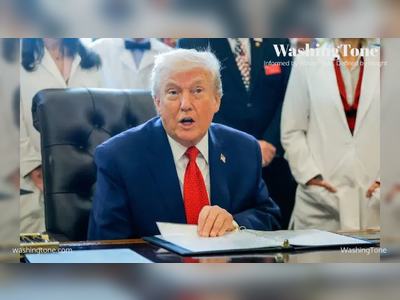
President Donald Trump used his State of the Union address to introduce a significant retirement savings initiative aimed at expanding access to retirement plans for about fifty-four million American workers who currently lack employer-sponsored options.
The proposal seeks to offer these workers access to retirement accounts modelled on the federal Thrift Savings Plan, which serves federal employees and includes a government match component.
In his speech, Trump highlighted that roughly half of all working Americans do not have access to retirement plans with employer matching contributions, describing the disparity as a fundamental weakness in the nation’s economic framework.
To address this, he proposed that the federal government would match worker contributions to the new accounts up to one thousand dollars per year.
The plan builds on the ‘Saver’s Match’ concept created under the 2022 Secure 2.0 legislation, which offers a federal contribution for qualifying low- and moderate-income workers.
However, the Trump initiative is designed to extend participation by establishing new account infrastructure and encouraging legislative action to automate enrollment, expand portability and broaden eligibility.
Administration officials argue that such accounts could help close the retirement savings gap, particularly for workers without traditional pensions or defined contribution plans like 401(k)s. They emphasise that broadening participation in retirement savings could strengthen long-term financial security for lower- and middle-income Americans.
Supporters in the policy community have praised the emphasis on accessibility and simplicity, noting that structural barriers have left many Americans outside the retirement savings system.
However, experts caution that overcoming underlying income constraints and ensuring widespread take-up will require coordinated legislative and regulatory action.
No formal legislation has been introduced yet to implement the plan, and significant details — including funding mechanisms and eligibility criteria — remain under discussion.
As Congress considers related measures, the proposal has already ignited debate about the best way to expand retirement security for workers across the United States.
The proposal seeks to offer these workers access to retirement accounts modelled on the federal Thrift Savings Plan, which serves federal employees and includes a government match component.
In his speech, Trump highlighted that roughly half of all working Americans do not have access to retirement plans with employer matching contributions, describing the disparity as a fundamental weakness in the nation’s economic framework.
To address this, he proposed that the federal government would match worker contributions to the new accounts up to one thousand dollars per year.
The plan builds on the ‘Saver’s Match’ concept created under the 2022 Secure 2.0 legislation, which offers a federal contribution for qualifying low- and moderate-income workers.
However, the Trump initiative is designed to extend participation by establishing new account infrastructure and encouraging legislative action to automate enrollment, expand portability and broaden eligibility.
Administration officials argue that such accounts could help close the retirement savings gap, particularly for workers without traditional pensions or defined contribution plans like 401(k)s. They emphasise that broadening participation in retirement savings could strengthen long-term financial security for lower- and middle-income Americans.
Supporters in the policy community have praised the emphasis on accessibility and simplicity, noting that structural barriers have left many Americans outside the retirement savings system.
However, experts caution that overcoming underlying income constraints and ensuring widespread take-up will require coordinated legislative and regulatory action.
No formal legislation has been introduced yet to implement the plan, and significant details — including funding mechanisms and eligibility criteria — remain under discussion.
As Congress considers related measures, the proposal has already ignited debate about the best way to expand retirement security for workers across the United States.