White HouseSenateThe HouseSupreme CourtFederal ReserveDOJState DepartmentTreasuryCensusBudget OfficeTrade Representative
WashingTone
Informed by Washington, Defined by Insight
Friday, Feb 13, 2026
WashingTone

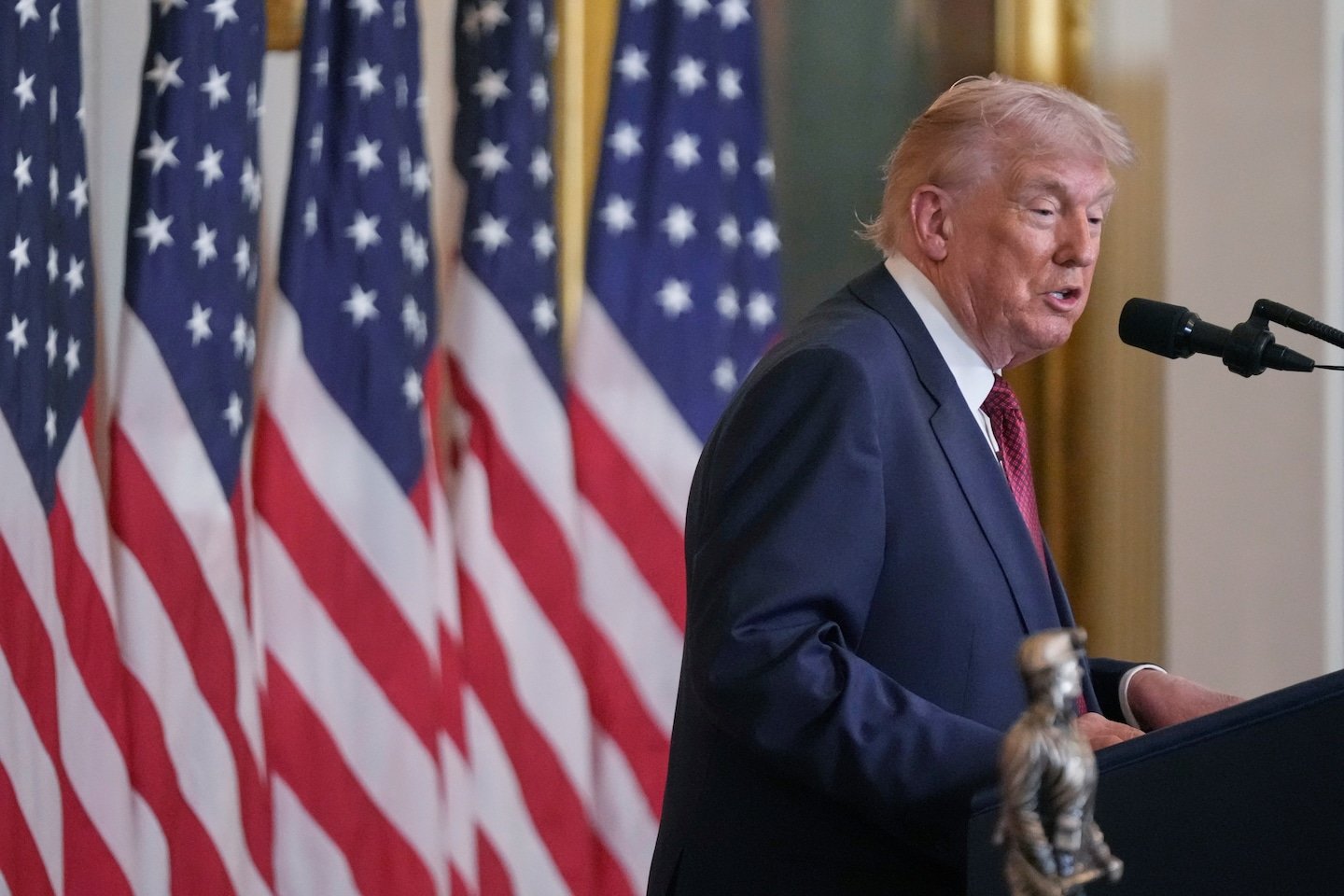
Trump Reverses Course on Governors’ White House Meeting After Bipartisan Backlash
President re-extends invitation to all state governors for traditional White House session following dispute over initial exclusion of Democrats
President Donald Trump reversed an earlier decision to limit participation in an annual White House gathering to Republican governors, restoring invitations to Democratic state leaders after a bipartisan uproar and internal negotiations.
The dispute emerged after the White House initially planned to host only Republican governors for a formal business breakfast with Trump on February twentieth, departing from decades of precedent in which the National Governors Association’s (NGA) yearly meeting with the president brought together governors from all parties.
That selective invitation prompted concern from the bipartisan governors’ group and threatened to remove the event from the NGA’s official agenda.
Under pressure from the NGA and amid growing bipartisan criticism, Trump instructed that governors from both parties would now be welcomed to the White House business session.
Oklahoma Governor Kevin Stitt, the Republican chair of the NGA, communicated to colleagues that the matter had been resolved and that invitations had been extended to all fifty-five governors, covering states and territories.
Trump framed the earlier confusion as a scheduling misunderstanding with Stitt, a message that sought to defuse the controversy.
While all governors are now invited to the breakfast meeting, the situation remains strained over a separate White House dinner.
Two Democratic governors, Maryland’s Wes Moore and Colorado’s Jared Polis, were excluded from that dinner and described the move as disrespectful to bipartisan tradition.
A number of Democratic governors collectively declined the invitation unless all party members were included.
Trump defended the decision on social media, asserting that the two excluded governors were “not worthy” of attendance, even as he noted invitations to other Democratic governors such as California’s Gavin Newsom and Illinois’s JB Pritzker.
The National Governors Association expressed satisfaction that the formal business session would be bipartisan, reinforcing the long-standing tradition of cross-party engagement between the White House and state executives on issues facing their constituents.
Governors from across the political spectrum are expected to convene in Washington from February nineteenth to twenty-first for their winter conference, with the restored invitation to the White House meeting helping preserve an important forum for federal-state dialogue.
The dispute emerged after the White House initially planned to host only Republican governors for a formal business breakfast with Trump on February twentieth, departing from decades of precedent in which the National Governors Association’s (NGA) yearly meeting with the president brought together governors from all parties.
That selective invitation prompted concern from the bipartisan governors’ group and threatened to remove the event from the NGA’s official agenda.
Under pressure from the NGA and amid growing bipartisan criticism, Trump instructed that governors from both parties would now be welcomed to the White House business session.
Oklahoma Governor Kevin Stitt, the Republican chair of the NGA, communicated to colleagues that the matter had been resolved and that invitations had been extended to all fifty-five governors, covering states and territories.
Trump framed the earlier confusion as a scheduling misunderstanding with Stitt, a message that sought to defuse the controversy.
While all governors are now invited to the breakfast meeting, the situation remains strained over a separate White House dinner.
Two Democratic governors, Maryland’s Wes Moore and Colorado’s Jared Polis, were excluded from that dinner and described the move as disrespectful to bipartisan tradition.
A number of Democratic governors collectively declined the invitation unless all party members were included.
Trump defended the decision on social media, asserting that the two excluded governors were “not worthy” of attendance, even as he noted invitations to other Democratic governors such as California’s Gavin Newsom and Illinois’s JB Pritzker.
The National Governors Association expressed satisfaction that the formal business session would be bipartisan, reinforcing the long-standing tradition of cross-party engagement between the White House and state executives on issues facing their constituents.
Governors from across the political spectrum are expected to convene in Washington from February nineteenth to twenty-first for their winter conference, with the restored invitation to the White House meeting helping preserve an important forum for federal-state dialogue.