White HouseSenateThe HouseSupreme CourtFederal ReserveDOJState DepartmentTreasuryCensusBudget OfficeTrade Representative
WashingTone
Informed by Washington, Defined by Insight
Sunday, Feb 08, 2026
WashingTone

Scholars Say Washington Is a Key Intended Audience for Revived KMT-CCP Forum
Taiwan opposition’s planned exchange with Chinese Communist Party is seen as signalling cross-Strait policy priorities to U.S. policymakers
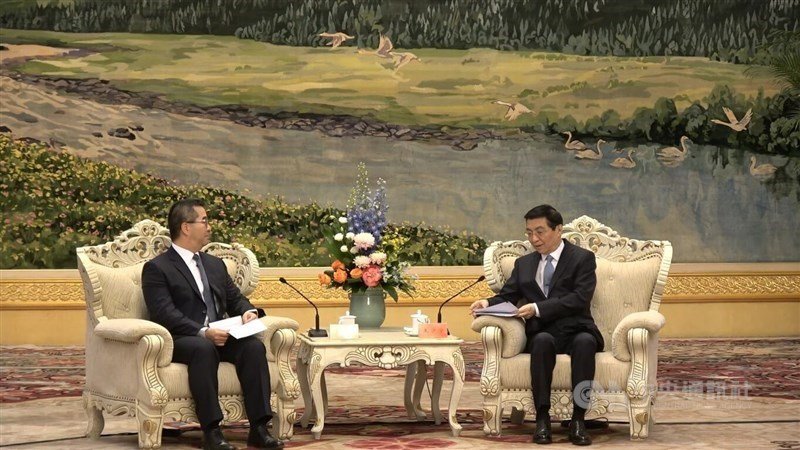
Taiwan’s planned revival of an inter-party forum between the Kuomintang (KMT) and the Chinese Communist Party (CCP) is drawing strategic interest far beyond Taipei and Beijing, with scholars suggesting the United States, particularly policymakers in Washington, is a primary audience for the initiative.
The forum, which has been discussed for early February after years in suspension, is framed by its organisers as a venue for technical and think-tank exchanges but is interpreted by analysts as an effort to shape international perceptions of Taiwan’s cross-Strait dialogue and influence U.S. policy on the issue.
The Cross-Strait Economic, Trade and Culture Forum, commonly known as the KMT-CCP Forum, was originally launched in 2006 as a platform for dialogue on economic, cultural and policy issues between Taiwan’s main opposition party and the CCP. It has been dormant since 2016 following shifts in Taiwan’s domestic politics.
Reports show that the next iteration will take place as an academic- and expert-focused meeting in Beijing, with participants from KMT-affiliated think tanks and CCP organisations.
Although the forum is officially described as focusing on non-political issues such as sustainable development, tourism, healthcare and climate change, observers argue its subtext is broader.
Several scholars and regional analysts have suggested that one important target of the revived exchanges is an international audience, particularly in Washington, where U.S. officials and strategists closely monitor cross-Strait dynamics.
The forum’s timing and framing are interpreted as efforts to signal alternative approaches to cross-Strait engagement that could reduce tensions and attract U.S. engagement on multiple fronts.
In expert discussions, proponents of re-engagement argue that by demonstrating willingness to maintain dialogue with Beijing, the KMT can present itself to Washington as a stabilising force in the region.
This comes amid broader debate over U.S. policy on Taiwan, where differing views on deterrence, dialogue and regional stability persist.
Critics within Taiwan, including leaders of the ruling Democratic Progressive Party, have sharply criticised the KMT-CCP forum as undermining national dignity and national security by appearing to align too closely with Beijing’s preferences.
They argue that Beijing’s influence over the forum’s agenda and timing raises questions about Taiwan’s agency in the discussions.
Nevertheless, the scholarly perspective that sees Washington as an important audience highlights the transnational political context in which the forum operates, with implications for how Taipei’s cross-Strait policies are perceived beyond the island itself.
With the forum set to proceed as a think-tank-led event, its impact on both domestic politics and international perceptions, particularly among U.S. decision-makers, is expected to be closely watched.
The forum, which has been discussed for early February after years in suspension, is framed by its organisers as a venue for technical and think-tank exchanges but is interpreted by analysts as an effort to shape international perceptions of Taiwan’s cross-Strait dialogue and influence U.S. policy on the issue.
The Cross-Strait Economic, Trade and Culture Forum, commonly known as the KMT-CCP Forum, was originally launched in 2006 as a platform for dialogue on economic, cultural and policy issues between Taiwan’s main opposition party and the CCP. It has been dormant since 2016 following shifts in Taiwan’s domestic politics.
Reports show that the next iteration will take place as an academic- and expert-focused meeting in Beijing, with participants from KMT-affiliated think tanks and CCP organisations.
Although the forum is officially described as focusing on non-political issues such as sustainable development, tourism, healthcare and climate change, observers argue its subtext is broader.
Several scholars and regional analysts have suggested that one important target of the revived exchanges is an international audience, particularly in Washington, where U.S. officials and strategists closely monitor cross-Strait dynamics.
The forum’s timing and framing are interpreted as efforts to signal alternative approaches to cross-Strait engagement that could reduce tensions and attract U.S. engagement on multiple fronts.
In expert discussions, proponents of re-engagement argue that by demonstrating willingness to maintain dialogue with Beijing, the KMT can present itself to Washington as a stabilising force in the region.
This comes amid broader debate over U.S. policy on Taiwan, where differing views on deterrence, dialogue and regional stability persist.
Critics within Taiwan, including leaders of the ruling Democratic Progressive Party, have sharply criticised the KMT-CCP forum as undermining national dignity and national security by appearing to align too closely with Beijing’s preferences.
They argue that Beijing’s influence over the forum’s agenda and timing raises questions about Taiwan’s agency in the discussions.
Nevertheless, the scholarly perspective that sees Washington as an important audience highlights the transnational political context in which the forum operates, with implications for how Taipei’s cross-Strait policies are perceived beyond the island itself.
With the forum set to proceed as a think-tank-led event, its impact on both domestic politics and international perceptions, particularly among U.S. decision-makers, is expected to be closely watched.