White HouseSenateThe HouseSupreme CourtFederal ReserveDOJState DepartmentTreasuryCensusBudget OfficeTrade Representative
WashingTone
Informed by Washington, Defined by Insight
Sunday, May 24, 2026
WashingTone

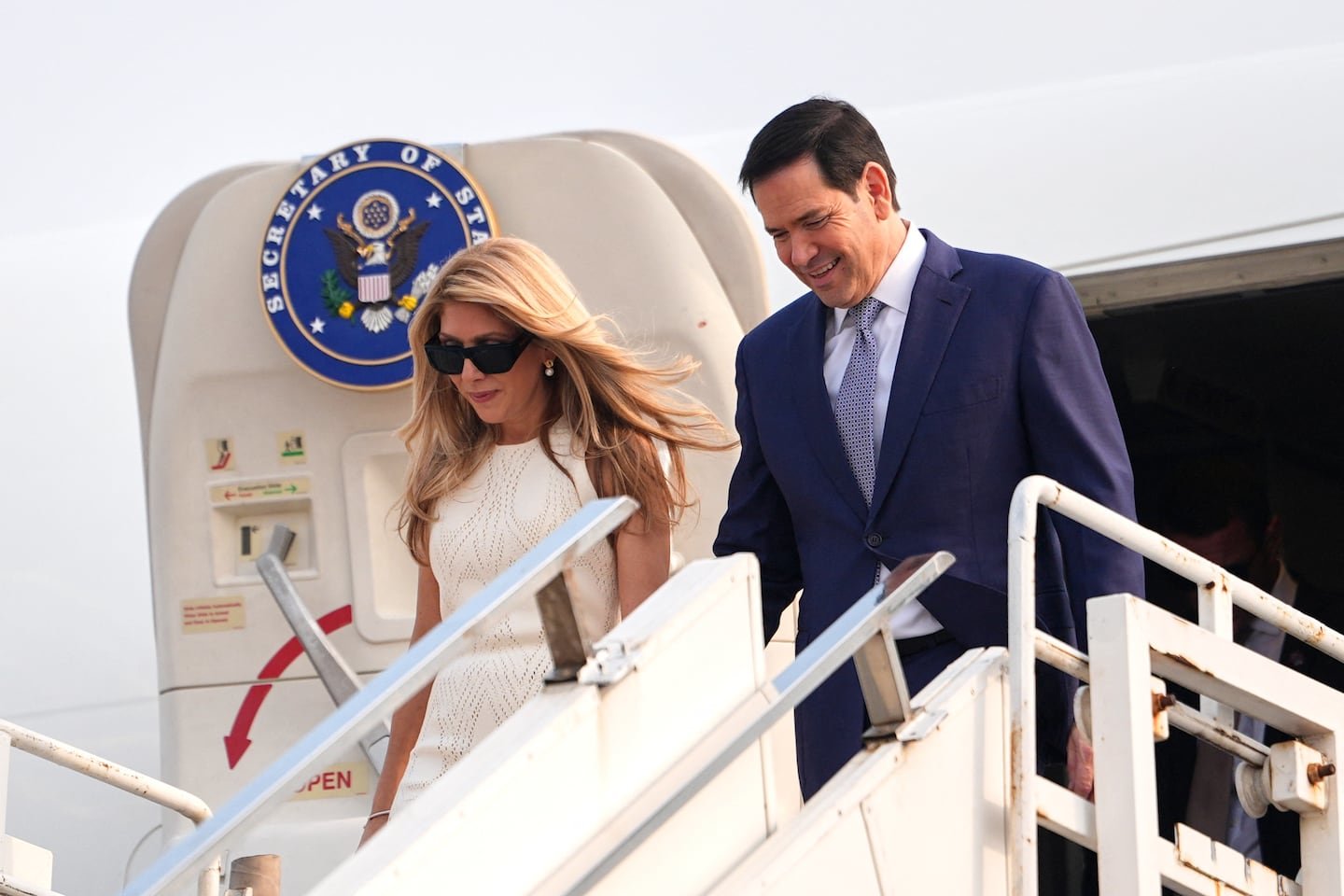
Marco Rubio’s India Visit Signals Renewed Focus on Quad Security Cooperation
U.S. Secretary of State meets counterparts from India, Australia, and Japan as the Quad grouping intensifies coordination on security, technology, and supply chains in the Indo-Pacific
A SYSTEM-DRIVEN diplomatic engagement is underway as U.S. Secretary of State arrives in for high-level meetings with counterparts from and under the framework of the Quadrilateral Security Dialogue, commonly known as the Quad.
The Quad is a strategic grouping designed to coordinate policy among four major Indo-Pacific democracies.
It is not a formal military alliance but functions as a diplomatic and strategic platform focused on maritime security, supply chain resilience, emerging technology standards, and regional stability.
Rubio’s arrival marks a continuation of sustained high-level engagement among Quad members, reflecting growing concern over regional security dynamics in the Indo-Pacific.
The grouping has become increasingly active in response to shifting military balances, maritime tensions, and competition over critical infrastructure and technology standards.
What is confirmed is that the meetings in India will bring together senior diplomatic representatives from all four countries to discuss cooperation on regional security architecture and economic resilience.
While specific agenda details vary by summit cycle, Quad meetings typically focus on maritime domain awareness, infrastructure investment initiatives, disaster response coordination, and secure technology supply chains.
The Indo-Pacific has become a central theatre of strategic competition, particularly due to increasing military activity in contested maritime regions and the expansion of naval capabilities across multiple states.
The Quad’s role has evolved accordingly, shifting from a loose consultation mechanism into a more structured coordination platform with working groups across defense, technology, and economic policy.
India’s role as host is significant.
As a major regional power with an independent foreign policy tradition, India has positioned itself as a central node in balancing regional security concerns while maintaining strategic autonomy.
The participation of Australia and Japan alongside the United States reflects a shared interest in maintaining open sea lanes and predictable trade routes in the Indo-Pacific.
Although the Quad does not function as a collective defense pact, its operational relevance has increased through joint exercises, intelligence sharing initiatives, and coordination on critical supply chains, particularly in semiconductors and rare earth materials.
These areas have become strategically sensitive due to global economic fragmentation and technology restrictions.
The broader implication of Rubio’s visit is continuity rather than disruption.
It signals that the United States and its key regional partners remain committed to institutionalizing cooperation in the Indo-Pacific despite domestic political cycles and shifting global crises.
The emphasis is on long-term alignment rather than immediate crisis response.
The meetings in India are expected to reinforce existing Quad initiatives and maintain diplomatic momentum on shared strategic priorities, further embedding the grouping as a stabilizing framework in a region defined by increasing geopolitical competition.
The Quad is a strategic grouping designed to coordinate policy among four major Indo-Pacific democracies.
It is not a formal military alliance but functions as a diplomatic and strategic platform focused on maritime security, supply chain resilience, emerging technology standards, and regional stability.
Rubio’s arrival marks a continuation of sustained high-level engagement among Quad members, reflecting growing concern over regional security dynamics in the Indo-Pacific.
The grouping has become increasingly active in response to shifting military balances, maritime tensions, and competition over critical infrastructure and technology standards.
What is confirmed is that the meetings in India will bring together senior diplomatic representatives from all four countries to discuss cooperation on regional security architecture and economic resilience.
While specific agenda details vary by summit cycle, Quad meetings typically focus on maritime domain awareness, infrastructure investment initiatives, disaster response coordination, and secure technology supply chains.
The Indo-Pacific has become a central theatre of strategic competition, particularly due to increasing military activity in contested maritime regions and the expansion of naval capabilities across multiple states.
The Quad’s role has evolved accordingly, shifting from a loose consultation mechanism into a more structured coordination platform with working groups across defense, technology, and economic policy.
India’s role as host is significant.
As a major regional power with an independent foreign policy tradition, India has positioned itself as a central node in balancing regional security concerns while maintaining strategic autonomy.
The participation of Australia and Japan alongside the United States reflects a shared interest in maintaining open sea lanes and predictable trade routes in the Indo-Pacific.
Although the Quad does not function as a collective defense pact, its operational relevance has increased through joint exercises, intelligence sharing initiatives, and coordination on critical supply chains, particularly in semiconductors and rare earth materials.
These areas have become strategically sensitive due to global economic fragmentation and technology restrictions.
The broader implication of Rubio’s visit is continuity rather than disruption.
It signals that the United States and its key regional partners remain committed to institutionalizing cooperation in the Indo-Pacific despite domestic political cycles and shifting global crises.
The emphasis is on long-term alignment rather than immediate crisis response.
The meetings in India are expected to reinforce existing Quad initiatives and maintain diplomatic momentum on shared strategic priorities, further embedding the grouping as a stabilizing framework in a region defined by increasing geopolitical competition.