White HouseSenateThe HouseSupreme CourtFederal ReserveDOJState DepartmentTreasuryCensusBudget OfficeTrade Representative
WashingTone
Informed by Washington, Defined by Insight
Friday, May 01, 2026
WashingTone

Student Arrested After Six Injured in Washington State High School Stabbing
Attack inside a school building leaves multiple students wounded, with authorities confirming swift containment and no ongoing threat
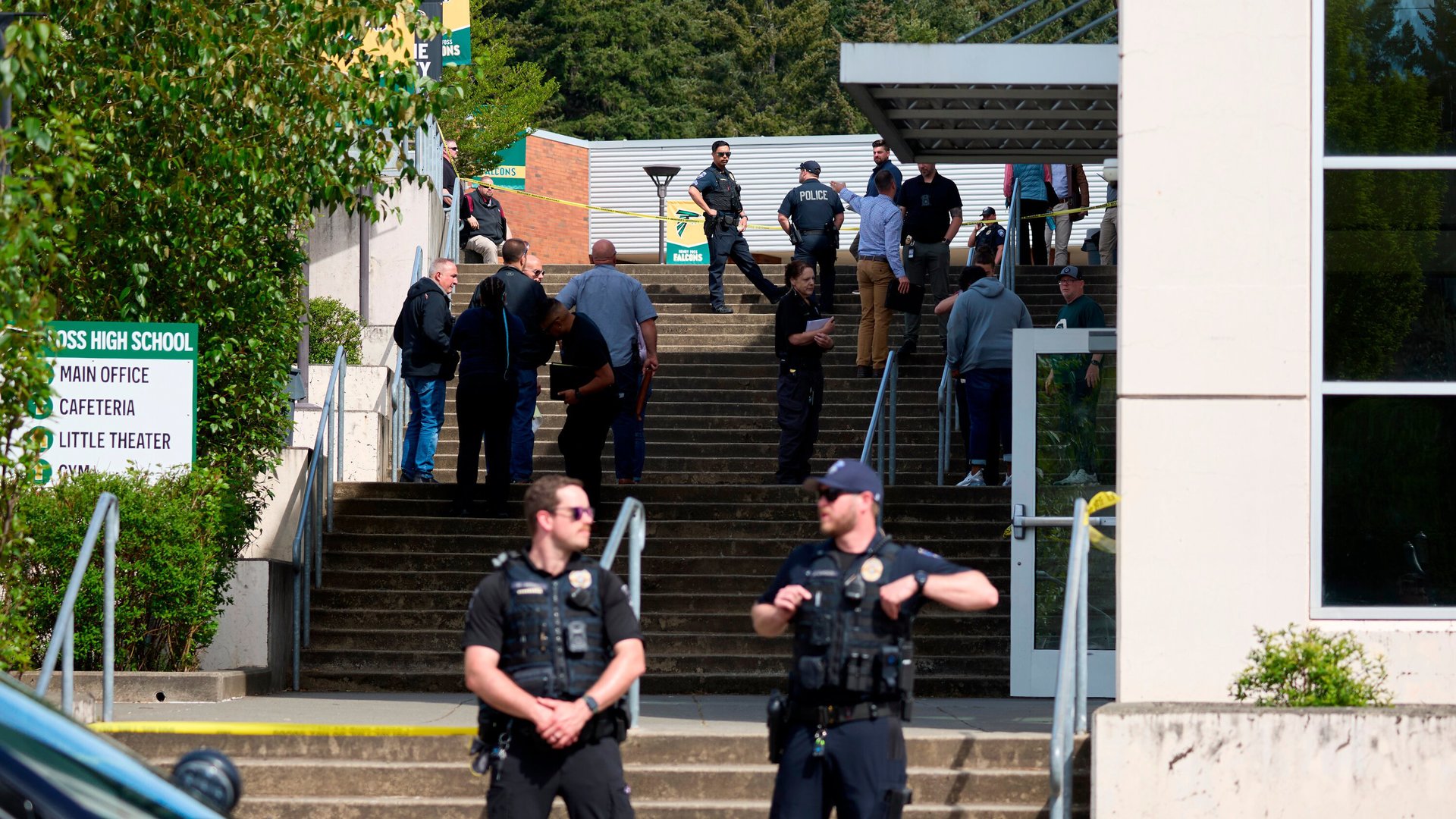
EVENT-DRIVEN violence inside a Washington state high school left six people injured after a stabbing during the school day, prompting an immediate lockdown and rapid police intervention.
What is confirmed is that the incident occurred on campus while classes were in session, with victims sustaining injuries that required hospital treatment.
Authorities have stated that all six injured individuals were students, and while several wounds were serious, none were reported as life-threatening.
Law enforcement responded quickly, securing the school and taking a suspect into custody within minutes.
Officials identified the suspect as a student at the same school, indicating the attack originated from within the campus community rather than from an external threat.
Once the suspect was detained, authorities confirmed there was no continuing danger to students or staff.
The mechanism of the attack reflects a contained but high-risk form of school violence.
A bladed weapon allowed the assailant to injure multiple victims in a short time span before intervention.
The speed of containment suggests that emergency protocols—lockdowns, internal alerts, and coordination with local police—were activated effectively, limiting the scale of the incident.
Investigators are now focused on motive and prior indicators.
Establishing whether the attack was targeted or indiscriminate is central to understanding how it unfolded.
Authorities are examining the suspect’s background, behavior at school, and any prior warning signs that could have triggered intervention.
The incident highlights ongoing vulnerabilities in school environments.
While much of the public debate in the United States has focused on firearms, this case underscores that other weapons can also produce rapid, multi-victim harm in confined settings.
Schools face structural challenges in monitoring individual behavior while maintaining open educational environments.
In the immediate aftermath, school officials implemented crisis response measures, including canceling classes, notifying families, and deploying counseling services for students and staff.
District administrators have begun reviewing security procedures and support systems, including threat assessment protocols designed to identify at-risk individuals before violence occurs.
At a broader level, such incidents feed into policy discussions about school safety, mental health resources, and the balance between prevention and response.
The effectiveness of safety strategies increasingly depends on early detection of behavioral risks rather than solely on physical security measures.
The confirmed outcome is that the suspect remains in custody, the injured students are receiving medical care, and the school district has shifted into recovery mode while authorities continue their investigation.
What is confirmed is that the incident occurred on campus while classes were in session, with victims sustaining injuries that required hospital treatment.
Authorities have stated that all six injured individuals were students, and while several wounds were serious, none were reported as life-threatening.
Law enforcement responded quickly, securing the school and taking a suspect into custody within minutes.
Officials identified the suspect as a student at the same school, indicating the attack originated from within the campus community rather than from an external threat.
Once the suspect was detained, authorities confirmed there was no continuing danger to students or staff.
The mechanism of the attack reflects a contained but high-risk form of school violence.
A bladed weapon allowed the assailant to injure multiple victims in a short time span before intervention.
The speed of containment suggests that emergency protocols—lockdowns, internal alerts, and coordination with local police—were activated effectively, limiting the scale of the incident.
Investigators are now focused on motive and prior indicators.
Establishing whether the attack was targeted or indiscriminate is central to understanding how it unfolded.
Authorities are examining the suspect’s background, behavior at school, and any prior warning signs that could have triggered intervention.
The incident highlights ongoing vulnerabilities in school environments.
While much of the public debate in the United States has focused on firearms, this case underscores that other weapons can also produce rapid, multi-victim harm in confined settings.
Schools face structural challenges in monitoring individual behavior while maintaining open educational environments.
In the immediate aftermath, school officials implemented crisis response measures, including canceling classes, notifying families, and deploying counseling services for students and staff.
District administrators have begun reviewing security procedures and support systems, including threat assessment protocols designed to identify at-risk individuals before violence occurs.
At a broader level, such incidents feed into policy discussions about school safety, mental health resources, and the balance between prevention and response.
The effectiveness of safety strategies increasingly depends on early detection of behavioral risks rather than solely on physical security measures.
The confirmed outcome is that the suspect remains in custody, the injured students are receiving medical care, and the school district has shifted into recovery mode while authorities continue their investigation.