White HouseSenateThe HouseSupreme CourtFederal ReserveDOJState DepartmentTreasuryCensusBudget OfficeTrade Representative
WashingTone
Informed by Washington, Defined by Insight
Thursday, Feb 05, 2026
WashingTone

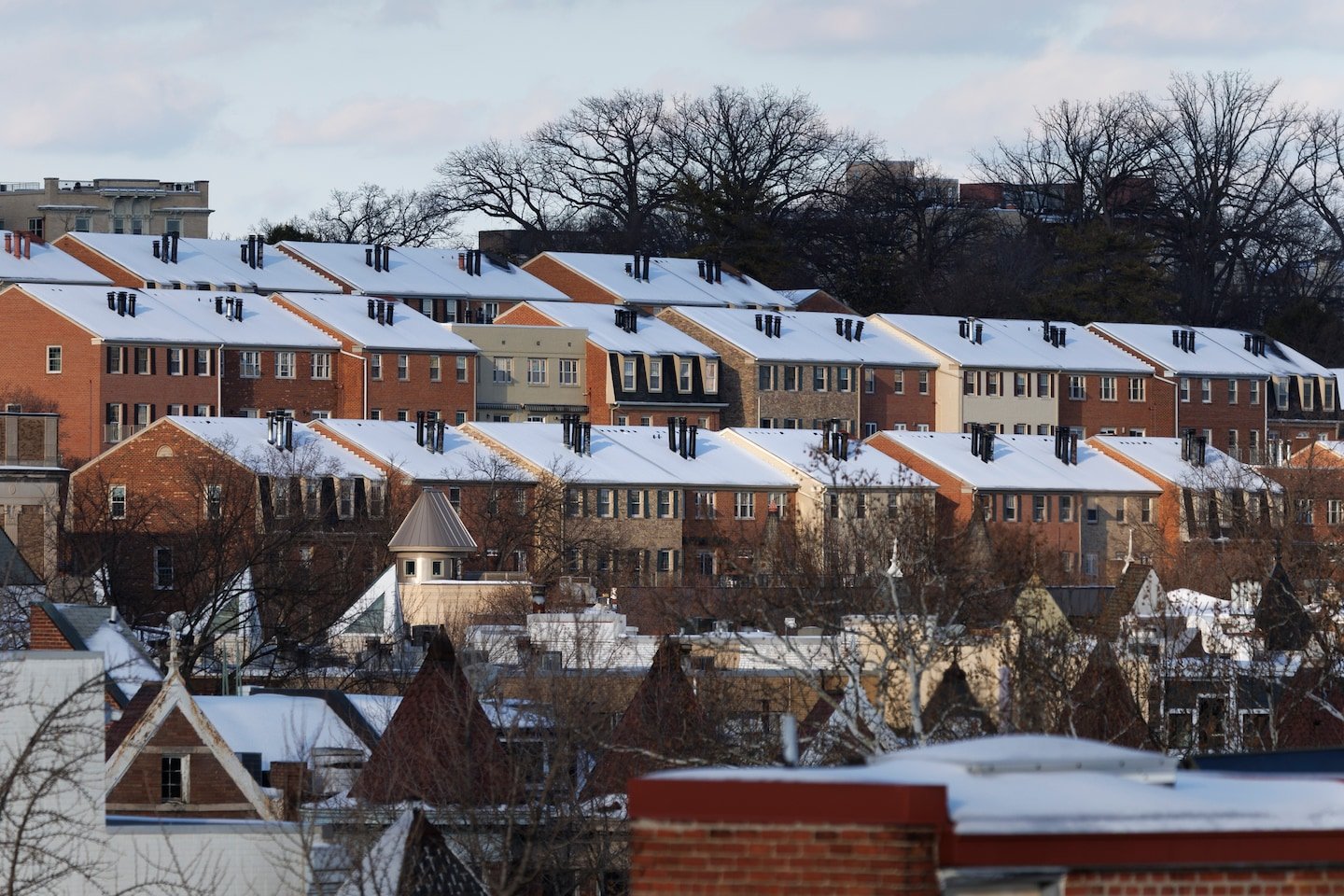
Data Gaps and Complex Markets Obscure True Scale of the U.S. Housing Crisis
Experts warn that fragmented information on affordability, homelessness and supply shortfalls hinders accurate measurement and policy responses
The United States is grappling with a multifaceted housing crisis, but experts caution that the true scale of the problem remains difficult to quantify with precision due to fragmented data, varying local conditions and limitations in official measurement tools.
Analysts, policymakers and housing advocates agree that growing unaffordability, stagnant new construction and rising homelessness point to systemic stress, yet no consensus figure encapsulates the full magnitude of demand-side pressures and unmet need.
Central to the challenge is the way housing data are collected and reported across federal, state and local agencies.
While some metrics, such as rental cost burden — typically defined as households spending more than thirty percent of income on housing — are tracked at national and regional levels, they often lag real-time conditions and fail to capture the nuances of local markets.
Many metropolitan areas and rural regions where housing stress is acute lack consistent, timely reporting, complicating efforts to compare conditions or identify trends.
Additionally, official homelessness counts, undertaken annually through point-in-time surveys, are widely understood to undercount people experiencing unstable housing, including those living doubled-up with relatives or in vehicles.
Economists also highlight the limitations of relying on vacancy rates and construction starts as proxies for supply shortages.
Vacancy rates may reflect affordability barriers more than physical scarcity, and construction data often fail to account for the specific types of housing most in demand, such as entry-level rentals or family-sized units.
Compounding these measurement challenges, affordability indices can mask disparities within broader regions, obscuring conditions in high-cost urban cores where median rents have outpaced wage growth for years.
Another complicating factor is the dynamic interplay between housing markets and broader economic conditions.
Factors such as mortgage rate volatility, shifts in remote work patterns, and uneven wage growth have reshaped demand in ways that historical datasets struggle to capture in real time.
The Covid-19 pandemic further disrupted traditional patterns of mobility and tenure, leading to rent freezes, eviction moratoriums and shifts in household composition that continue to reverberate through housing markets.
Despite these challenges, researchers and advocacy groups are calling for more comprehensive, granular and harmonised data collection to inform policymaking.
Proposals include expanding the frequency and scope of federal surveys, integrating administrative records from tax and utility data, and leveraging technological tools such as real-time listings analytics.
Enhanced data infrastructure, proponents argue, would allow for more targeted interventions, better tracking of policy impacts, and a clearer understanding of where need is most pronounced.
Policymakers are also exploring the use of modelling and predictive analytics to fill gaps, though these approaches depend on the quality and breadth of underlying datasets.
In the absence of unified national metrics that fully capture the breadth of housing distress, cities, states and advocates will continue to rely on a patchwork of indicators.
The result is a housing narrative that recognises deep distress without a single, definitive figure to measure its full scale — a reality that complicates efforts to marshal resources and shape responses at every level of government.
Analysts, policymakers and housing advocates agree that growing unaffordability, stagnant new construction and rising homelessness point to systemic stress, yet no consensus figure encapsulates the full magnitude of demand-side pressures and unmet need.
Central to the challenge is the way housing data are collected and reported across federal, state and local agencies.
While some metrics, such as rental cost burden — typically defined as households spending more than thirty percent of income on housing — are tracked at national and regional levels, they often lag real-time conditions and fail to capture the nuances of local markets.
Many metropolitan areas and rural regions where housing stress is acute lack consistent, timely reporting, complicating efforts to compare conditions or identify trends.
Additionally, official homelessness counts, undertaken annually through point-in-time surveys, are widely understood to undercount people experiencing unstable housing, including those living doubled-up with relatives or in vehicles.
Economists also highlight the limitations of relying on vacancy rates and construction starts as proxies for supply shortages.
Vacancy rates may reflect affordability barriers more than physical scarcity, and construction data often fail to account for the specific types of housing most in demand, such as entry-level rentals or family-sized units.
Compounding these measurement challenges, affordability indices can mask disparities within broader regions, obscuring conditions in high-cost urban cores where median rents have outpaced wage growth for years.
Another complicating factor is the dynamic interplay between housing markets and broader economic conditions.
Factors such as mortgage rate volatility, shifts in remote work patterns, and uneven wage growth have reshaped demand in ways that historical datasets struggle to capture in real time.
The Covid-19 pandemic further disrupted traditional patterns of mobility and tenure, leading to rent freezes, eviction moratoriums and shifts in household composition that continue to reverberate through housing markets.
Despite these challenges, researchers and advocacy groups are calling for more comprehensive, granular and harmonised data collection to inform policymaking.
Proposals include expanding the frequency and scope of federal surveys, integrating administrative records from tax and utility data, and leveraging technological tools such as real-time listings analytics.
Enhanced data infrastructure, proponents argue, would allow for more targeted interventions, better tracking of policy impacts, and a clearer understanding of where need is most pronounced.
Policymakers are also exploring the use of modelling and predictive analytics to fill gaps, though these approaches depend on the quality and breadth of underlying datasets.
In the absence of unified national metrics that fully capture the breadth of housing distress, cities, states and advocates will continue to rely on a patchwork of indicators.
The result is a housing narrative that recognises deep distress without a single, definitive figure to measure its full scale — a reality that complicates efforts to marshal resources and shape responses at every level of government.